


Jaw Pain Dentist Auckland: Relief for TMJ and Jaw Discomfort in 2026
- Kavendra Naidoo
- 2 hours ago
- 13 min read
Did you know that nearly 30 percent of adults in New Zealand experience the nagging discomfort of jaw pain, while over a third deal with that unsettling clicking sound every time they chew? It's exhausting to live with chronic tension headaches or the constant worry that your jaw might lock during a favourite meal. You've likely tried every over-the-counter remedy available, yet the dull ache persists, often accompanied by anxiety about what a permanent fix might cost. Finding a skilled jaw pain dentist Auckland patients can rely on is the first step toward reclaiming your comfort and confidence. We're committed to helping you understand exactly why your jaw is aching and providing the expert care needed for lasting relief without the need for constant painkillers.
In this guide, we'll explore the most effective TMJ treatments available in 2026, from advanced diagnostics to gentle, non-invasive therapies. You'll learn the science behind that clicking sound and discover how our local clinic provides accessible care through flexible payment plans. Our goal is to help you move past the discomfort and get back to enjoying life with a smile that feels as good as it looks.
Key Takeaways
Understand the crucial difference between the TMJ joint and the disorders that cause persistent jaw tension and aching.
Recognise how "hidden" symptoms like earaches and ringing in the ears are often directly linked to your jaw health.
Discover the common causes of discomfort, including how teeth grinding and misalignment put unnecessary pressure on your joints.
Learn how a dedicated jaw pain dentist Auckland can help you find relief with non-invasive treatments like custom-made splints.
Explore accessible care options at our local clinics, designed to make your journey to a pain-free life as comfortable as possible.
Table of Contents
What is Temporomandibular Joint (TMJ) Disorder?
Your jaw joint is one of the most hardworking and intricate parts of your body. Known as the Temporomandibular Joint, or TMJ, it acts like a sliding hinge that allows you to talk, chew, and yawn without a second thought. Because it handles both rotation and gliding movements, it's considered one of the most complex joints in human anatomy. When this delicate system is in harmony, life is easy. However, when the muscles, ligaments, or the joint itself stop functioning correctly, it leads to a range of issues collectively known as Temporomandibular joint dysfunction (TMD).
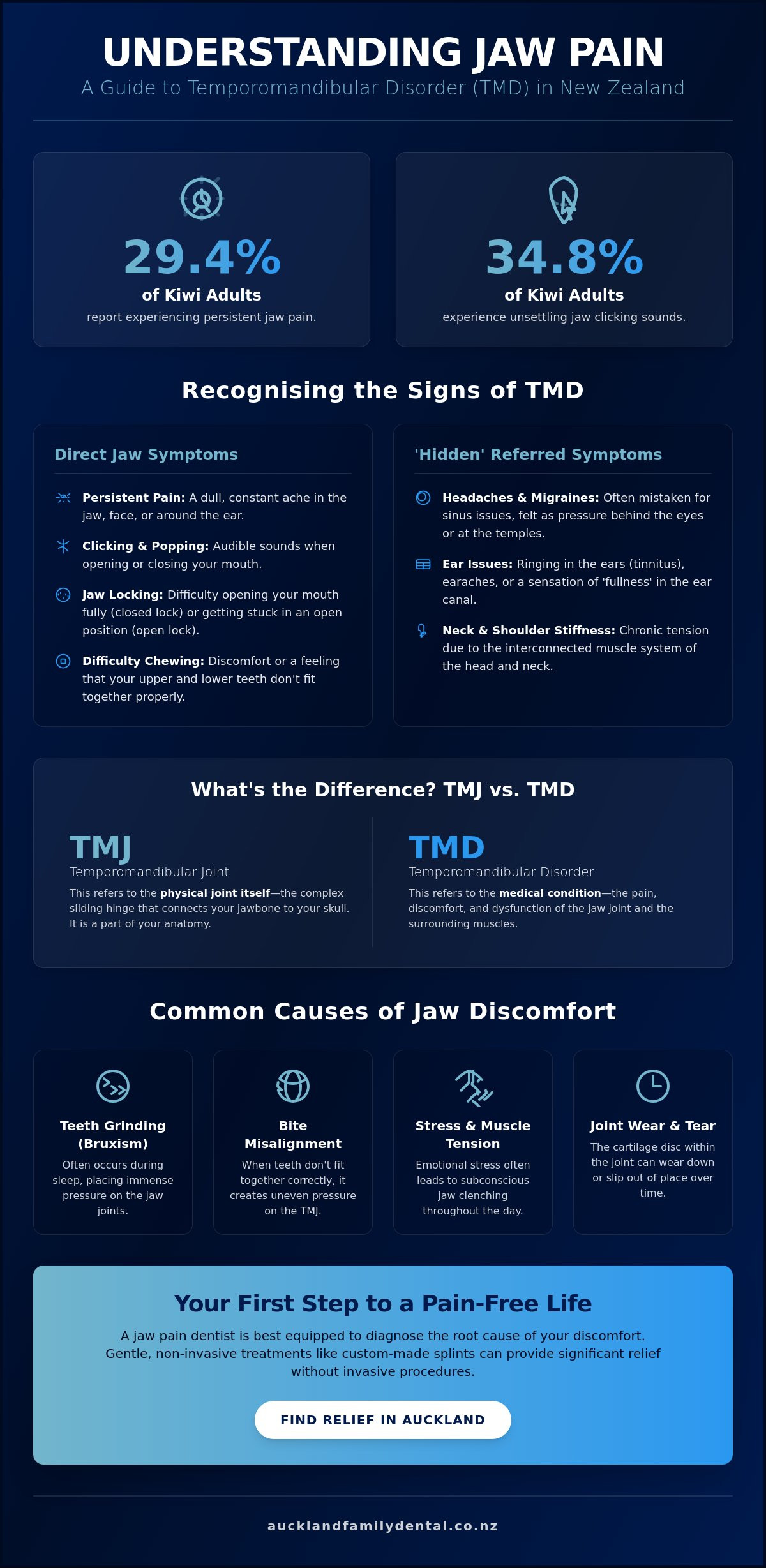
It's helpful to distinguish between the two terms: TMJ refers to the joint itself, while TMD refers to the disorder or the pain you're feeling. This discomfort is often a "referred" pain, meaning the source of the trouble is in the joint, but you might feel it as a migraine, an earache, or neck tension. Research from a Dunedin study involving 38 year olds found that 29.4 percent of participants reported TMJ pain, while 34.8 percent experienced jaw clicking. With such a high prevalence in New Zealand, understanding the mechanics of your jaw is the first step toward finding a solution.
The Anatomy of Your Jaw Joint
The TMJ is the connection between the lower jaw and the temporal bone of the skull. It's unique because it must facilitate two distinct types of movement. First, it acts as a hinge so you can open your mouth; second, it slides forward, backward, and side to side. To keep these movements smooth, a small cartilage disc sits between the ball and socket of the joint, acting as a vital cushion. When this disc slips out of place or wears down, you might hear that characteristic clicking or popping sound that often prompts a visit to a jaw pain dentist Auckland families trust.
Why General Dentists are the First Port of Call
Many people initially consult a GP for jaw discomfort, but a dentist is often better equipped to identify the root cause. Dentists are specifically trained to understand "occlusion," which is the way your teeth fit together. If your bite is even slightly misaligned, it can place immense, uneven pressure on the TMJ. In New Zealand, our dental professionals often work in a collaborative model with physiotherapists and pain specialists to ensure a holistic approach to recovery. Starting with a dental exam is a gentle, non-invasive way to rule out tooth-related issues before exploring more complex treatments. It's a supportive first step that focuses on your long term comfort and wellness.
Recognising the Signs: Common Symptoms of Jaw Pain
Living with jaw pain often feels like a puzzle where the pieces don't quite fit. For some, it's a constant, dull throb that lingers throughout the workday; for others, it's a sharp, electric shock that occurs only when biting into something firm. Beyond the physical ache, the emotional toll of chronic facial pain can be significant, leading to irritability and a diminished quality of life. If you find yourself constantly rubbing your temples or avoiding social dinners, speaking with a jaw pain dentist Auckland can help clarify whether these symptoms are linked to your jaw joint.
It's common to experience "hidden" symptoms that seem unrelated to your teeth. Tinnitus (ringing in the ears), a feeling of "fullness" in the ear canal, and persistent neck or shoulder stiffness are frequently reported by those with jaw issues. This happens because the nerves and muscles surrounding the jaw are closely interconnected with the rest of your head and neck. When one area is under strain, the pain radiates, often leaving patients feeling generally unwell without a clear cause.
While these auditory symptoms are frequently jaw-related, ruling out primary ear issues is a sensible step. Specialists like Amazing Hearing Centre provide a great example of how professional ear care can help patients distinguish between ear canal blockages and referred pain from the jaw joint.
Clicking, Popping, and Locking
That audible "click" when you open wide is usually the sound of the small cartilage disc within the joint slipping out of place. While many people live with clicking for years without pain, it can progress to "locking." A closed lock occurs when you cannot open your mouth fully, while an open lock means the jaw is stuck in an open position. These moments are understandably frightening, but they are treatable. Modern dental techniques focus on gently realigning the joint to restore smooth, silent movement. Reassurance and a structured care plan can often resolve these issues without invasive surgery.
The TMJ-Headache Connection
Many Aucklanders visit their GP for what they believe are chronic sinus infections or migraines, only to find the pressure is actually coming from their jaw. Jaw clenching, especially at night, creates intense strain in the temporalis muscle, which often manifests as a crushing sensation behind the eyes. For those seeking authoritative information on TMD treatments and symptoms, it's clear that muscle tension is a primary driver. Clinical observations suggest that a significant majority of tension-type headaches are rooted in this specific muscle strain, making a dental assessment a vital part of headache management.
When is it a Dental Emergency?
While some discomfort can wait for a routine check-up, certain signs require immediate attention. If you experience any of the following, you should contact a jaw pain dentist Auckland immediately:
Your jaw is physically stuck in an open or closed position.
Sudden, significant facial swelling near the ear or jawline.
Severe pain that prevents you from eating or drinking entirely.
For these urgent cases, we offer same-day emergency appointments to provide relief. While waiting for your visit, applying a warm compress to the side of your face can help soothe the muscles and reduce the intensity of the spasm. Taking this quick action can prevent a minor joint displacement from becoming a more painful, long-term issue.
Why Does My Jaw Hurt? Common Causes in Auckland
Identifying the root cause of your discomfort is essential for finding a treatment that actually lasts. While the Symptoms of TMJ disorders can feel similar from person to person, the triggers are often quite diverse. For many, the issue stems from a combination of dental mechanics and the high-pressure environment of modern life. When you visit a jaw pain dentist Auckland families trust, the first goal is to determine whether your pain is caused by a habit, an injury, or the way your teeth naturally sit together.
Dental misalignment, known as malocclusion, is a frequent contributor to joint strain. If your upper and lower teeth don't meet correctly, your jaw muscles have to work overtime to compensate every time you chew or speak. Over months or years, this uneven pressure can fatigue the muscles and displace the protective disc within the joint. Physical trauma also plays a role. Old sports injuries from a weekend at the local rugby club or minor whiplash from a car accident can lead to long-term joint instability that may only manifest as pain years later.
Bruxism: The Night-time Habit You Don’t Know You Have
Bruxism, or teeth grinding, is perhaps the leading cause of jaw pain we see in our clinics. It's a silent habit because most people do it while they're fast asleep, unaware of the incredible force they're exerting on their teeth and joints. You might not realise you're doing it until a partner mentions the sound or you notice specific tell-tale signs. Morning jaw soreness, flattened or chipped tooth edges, and a "scalloped" appearance on the sides of your tongue are all indicators that your jaw isn't resting at night. A custom-made night guard is often the most effective solution, providing a physical barrier that protects your enamel and allows your overworked muscles to finally relax.
Stress, Posture, and the Modern Auckland Lifestyle
We often talk about "Auckland Stress" because our unique lifestyle factors directly impact our physical health. Think about a typical morning commute on the Southern Motorway; the frustration of stop-start traffic often leads to subconscious jaw clenching. Similarly, "tech neck" has become a significant issue for those working in the Auckland CBD. When you hunch over a laptop or phone, your head moves forward, pulling on the muscles that connect to your jaw. This postural strain creates a cycle of tension that radiates upward. Organising your workspace with an ergonomic setup and being mindful of your posture during the day can significantly reduce the load on your TMJ, helping you maintain the benefits of your dental treatment.
Professional Treatment Options and Home Care
When you're ready to move beyond simply managing the ache and start solving the root cause, a structured treatment plan is essential. The most effective approach for most TMJ disorders in 2026 begins with conservative, reversible therapies. This often involves a "jaw rest" period where you stick to a soft food diet, such as smoothies, soups, and slow-cooked meals, for several weeks. Applying warm compresses to the side of the face can also increase blood flow and help tight muscles release their grip. If these initial steps don't provide sufficient relief, a jaw pain dentist Auckland expert can introduce more targeted clinical interventions.
For cases where dental misalignment is the primary driver of joint strain, we may recommend orthodontics like Invisalign to gently guide your teeth into a more harmonious position. Alternatively, bite equilibration involves making tiny, precise adjustments to the chewing surfaces of your teeth to ensure your weight is distributed evenly when you bite down. In more severe instances of muscle spasm, therapeutic injections like Botox can be used to temporarily relax overworked jaw muscles, breaking the cycle of chronic tension and allowing the joint to heal.
Custom Splints vs. Chemist Mouthguards
It's tempting to pick up a "boil and bite" mouthguard from a local chemist, but these generic devices often do more harm than good. Because they aren't precisely fitted to your unique bite, they can be bulky and may actually encourage your brain to chew on them, increasing muscle activity at night. In contrast, a custom-fitted occlusal splint is designed using high-precision digital scans. These slim, durable devices are engineered to hold your jaw in its most relaxed position, protecting your enamel from grinding while giving your joints a much-needed break. While the initial investment is higher, the long-term cost-benefit of preventing cracked teeth and complex restorative work is significant.
Lifestyle Adjustments for Immediate Relief
Small changes in your daily habits can make a surprising difference in your comfort levels. One of the most effective techniques is the "lips together, teeth apart" resting position. Your teeth should only touch when you're eating or swallowing; at all other times, there should be a slight gap between them to prevent muscle fatigue. You can also incorporate gentle jaw stretches into your day, such as slowly opening your mouth while keeping your tongue pressed against the roof of your mouth. During a flare-up, it's best to avoid chewing gum, hard lollies, or tough meats that require repetitive, forceful biting. If you're looking for a personalised plan to reclaim your comfort, book a consultation with our Auckland team today.
Find Relief at Your Local Auckland Family Dental Clinic
Finding a dedicated jaw pain dentist Auckland residents can rely on shouldn't be another source of stress in your busy life. We understand that chronic jaw discomfort is more than just a physical ache; it affects your mood, your sleep, and your ability to enjoy a meal with friends. That's why our network of clinics across the city is designed to be accessible, supportive, and focused on long-term wellness. With modern facilities in Milford, Parnell, New Lynn, Drury, and Manukau, expert care is always within reach, whether you're heading home from the CBD or live in the outer suburbs.
Our approach combines professional authority with a warm, patient-centred atmosphere. We've moved away from the cold, clinical feel of traditional dental surgeries to create spaces that lower anxiety and promote comfort. By using advanced diagnostic technology, such as high-resolution digital imaging, we can pinpoint the exact cause of your TMJ issues with incredible accuracy. This ensures that your treatment plan isn't just a generic solution but a precise roadmap to recovery tailored to your specific needs.
Personalised Care Across Auckland
Every person's experience with jaw pain is unique, which is why we never take a one size fits all approach. When you visit us, we take the time to listen to your story, considering factors like your work environment, your posture, and even your daily commute. This holistic view allows us to create a personalised care plan that fits seamlessly into your lifestyle. Our clinics are intentionally designed to feel inviting and calm, helping you feel at ease from the moment you walk through the door. We encourage you to book a consultation at the centre nearest to your home or office to begin your journey toward a pain-free life.
Easy Booking and Flexible Payments
We believe that high-quality dental care should be accessible to every Auckland family. Managing the cost of specialised treatments, such as custom-made occlusal splints or orthodontics, can sometimes feel daunting. To help ease this concern, we offer a variety of flexible payment plans that allow you to spread the cost of your care over time. Whether you're using a local provider like Q-Card or other finance options, our team is here to help you find a solution that works for your budget. Our online booking process is simple and transparent, allowing you to secure a TMJ assessment at a time that suits you best. Don't let persistent discomfort hold you back any longer. Book your jaw pain assessment at Auckland Family Dental today and take the first step toward lasting relief.
Take the First Step Toward a Pain-Free Life
Living with constant jaw tension or the fear of your jaw locking doesn't have to be your "new normal." By understanding the mechanics of TMJ and identifying the lifestyle habits that trigger discomfort, you've already begun the journey to recovery. Whether it's addressing night-time grinding with a custom splint or correcting a misaligned bite, the right intervention can protect your teeth and restore your quality of life. Finding a compassionate jaw pain dentist Auckland families rely on ensures you receive a diagnosis that looks at your holistic wellness rather than just your symptoms.
With more than four convenient locations across the city, we make it easy to access expert care near your home or work. We offer same-day emergency appointments for urgent relief and provide flexible dental payment plans to keep treatment within reach for everyone. You deserve to eat, speak, and smile without hesitation or pain. Book your jaw pain assessment at Auckland Family Dental today. We're here to guide you back to comfort with the gentle, professional care you deserve.
Frequently Asked Questions
Can a dentist actually help with jaw pain?
Yes, dentists are often the primary providers for jaw relief because they specialise in how your teeth, muscles, and joints work together. A jaw pain dentist Auckland expert can evaluate your bite alignment and identify if issues like bruxism or malocclusion are causing your discomfort. By addressing these dental roots, we can provide targeted treatments that offer much more than temporary pain relief.
Is jaw pain a sign of a heart attack or a dental issue?
While sudden jaw pain can occasionally be a symptom of a heart attack, especially when paired with chest pressure or shortness of breath, chronic pain or clicking is usually a dental concern. If your pain is persistent and related to chewing or mouth movement, it's likely a joint or muscle issue. However, if you experience sudden, severe pain radiating to your arm, seek emergency medical help immediately.
How much does TMJ treatment cost in Auckland?
The cost of treatment varies significantly depending on whether you require a simple diagnostic assessment, a custom-fitted splint, or orthodontic alignment. Every case is unique; some patients find relief with minor adjustments while others benefit from a more comprehensive plan. We focus on making care accessible by offering flexible payment plans to help manage the investment in your long-term health and comfort.
Will my jaw pain go away on its own if I just wait?
Minor discomfort caused by temporary stress might settle with rest, but chronic pain rarely disappears without intervention. Waiting too long can allow the joint to deteriorate further or lead to cracked teeth from constant grinding. Early assessment is the most effective way to prevent a manageable issue from becoming a complex dental emergency that requires more invasive care.
What is the best way to stop grinding my teeth at night?
A custom-made occlusal splint is widely considered the gold standard for managing night-time grinding. These durable devices are designed from digital scans of your mouth to ensure a perfect fit that protects your enamel and allows your muscles to rest. Unlike generic chemist guards, a professional splint is slim and comfortable, making it easier to wear consistently for the best results.
Can Invisalign or braces fix my jaw pain?
If your jaw discomfort is caused by a misaligned bite, orthodontic treatments like Invisalign can be highly effective. By gently moving your teeth into their correct positions, we can ensure that the pressure of chewing is distributed evenly across your jaw joints. This reduces the strain on your TMJ and can eliminate the root cause of chronic muscle tension and headaches.
Do I need a referral to see a jaw pain dentist in Auckland?
No, you do not need a referral from a GP or another specialist to visit our clinics. You can book directly with a jaw pain dentist Auckland patients trust for a comprehensive assessment. We often work alongside other health professionals to ensure your care is holistic; for example, patients undergoing more intensive procedures might first obtain medical clearance and pre-surgical testing from a primary care physician like John Abroon M.D.. Starting with a dental exam is a straightforward and non-invasive way to begin your journey toward relief.
Does ACC cover jaw pain treatment in New Zealand?
ACC may provide coverage if your jaw condition is the direct result of a specific accident or injury, such as a sports impact or a fall. However, they generally do not cover pain caused by normal wear and tear, stress, or long-term grinding. It's important to note that any specialist treatment for a covered injury must receive prior approval from ACC before you begin the process.